Medical cannabis UK — frequently asked questions
Straightforward answers to the questions patients ask most often about accessing legal medical cannabis in the UK.
Eligibility & legal status
Yes. Since 1 November 2018, cannabis-based medicines are legal in the UK when prescribed by a specialist on the GMC specialist register. Recreational use remains illegal under the Misuse of Drugs Act 1971.
No. Only specialists on the GMC specialist register can prescribe cannabis-based medicines in the UK. Your GP can refer you to a specialist or provide supporting medical records, but they cannot issue the prescription themselves.
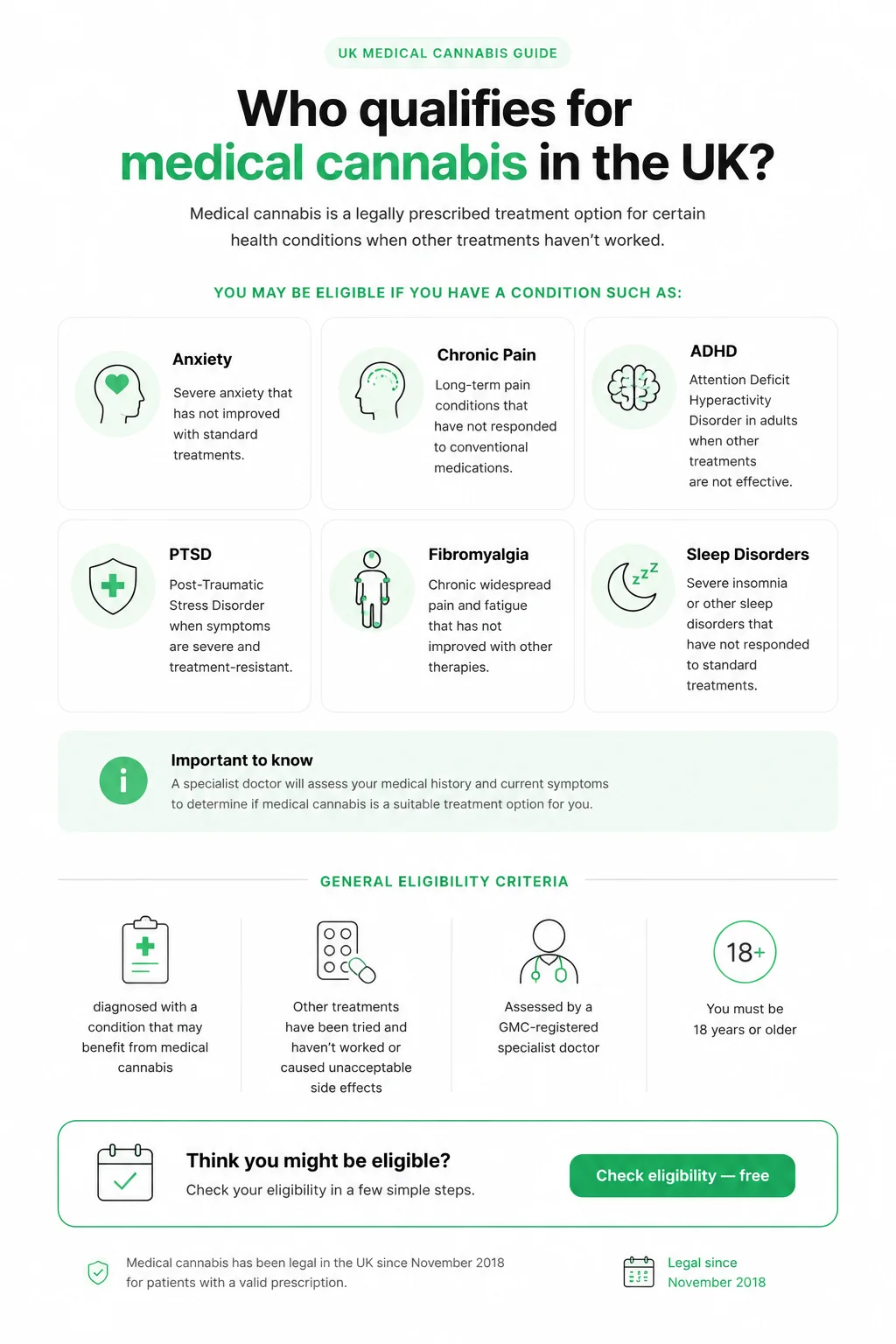
There is no official government list. Any specialist may prescribe if clinically appropriate. In practice, the most commonly treated conditions include chronic pain, PTSD, anxiety disorders, multiple sclerosis, epilepsy, fibromyalgia, sleep disorders linked to chronic conditions, cancer-related symptoms, and Tourette syndrome. See our full conditions guide for more detail on each.
Yes. UK specialists require that at least two conventional treatments have been tried and have either failed to provide adequate relief or caused unacceptable side effects. This is not a legal requirement per se, but it is the clinical standard applied by all licensed UK prescribers.
Rarely. The NHS has approved only three cannabis-based medicines: Epidyolex (for specific treatment-resistant epilepsies), Sativex (for MS spasticity), and nabilone (for chemotherapy-induced nausea). These are very rarely funded. The vast majority of UK patients access medical cannabis through private clinics.
For the full legal framework behind these rules, see our UK cannabis law guide →
Cost & process
The initial consultation typically costs £79–£200. Monthly follow-up appointments cost £50–£100. The medicine itself costs £150–£400 per month depending on the product, strength, and quantity prescribed. Medical cannabis is not routinely available on the NHS.
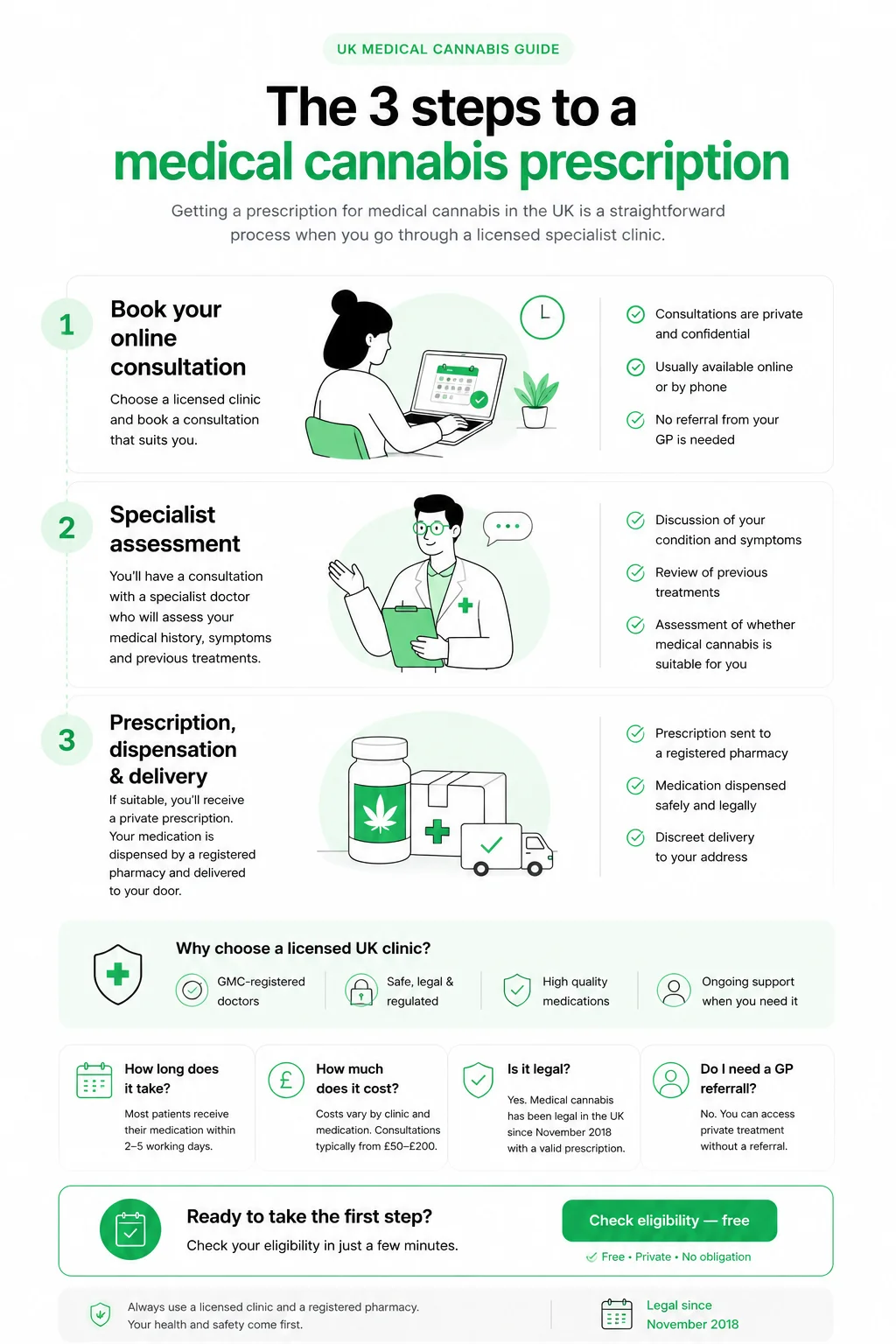
From booking to receiving your first medicine typically takes 1–3 weeks. Initial consultation appointments are often available within 1–5 days. The prescription is usually sent to the dispensary the same day or next day after the appointment. Dispensary delivery takes a further 3–7 days.
Yes. All UK medical cannabis clinics offer video consultations. You do not need to visit a clinic in person. The prescription is sent digitally to a licensed dispensary, which delivers to your registered UK address.
Most private medical cannabis clinics do not require a formal GP referral. However, you will need to provide evidence of your diagnosis and treatment history — typically a GP summary letter or medical records.
The specialist will review your medical history, current medications, diagnosis, and previous treatment attempts. They will assess whether cannabis medicine is clinically appropriate for you. The consultation typically lasts 30–45 minutes and takes place via video call. For a full breakdown of every step, read our step-by-step prescription guide.
Most clinics require follow-up appointments every 1–3 months to renew your prescription and monitor your progress. These are typically 15–20 minutes and cost £50–£100. Missing a follow-up can result in your prescription not being renewed.

Practical & safety
CBD (cannabidiol) products sold in UK shops are legal without a prescription and contain no more than 1mg of THC per container. Medical cannabis contains higher concentrations of cannabinoids including THC and is only available on prescription. The therapeutic doses in licensed medicines are far higher than in over-the-counter CBD products.
It depends on the product and your individual response. In the UK, driving with more than specified nanogram limits of THC in the blood is a criminal offence — regardless of whether you have a valid prescription. Check with your prescribing specialist before driving.
This is complex and varies by country. Within the UK, your prescription is legally valid. For international travel, you may need a personal import licence from the Home Office. Many countries do not recognise UK medical cannabis prescriptions. Always check the laws of your destination country and speak with your clinic before travelling.
Yes. Standard drug tests screen for THC metabolites, which can be detected for days or weeks after use. Having a valid medical cannabis prescription does not exempt you from workplace drug testing. Discuss this with your employer and specialist before starting treatment.
Possibly, but this must be assessed by your prescribing specialist. Cannabis medicines can interact with a range of drugs including blood thinners, antiepileptics, and antidepressants. Always disclose all current medications at your consultation.
UK prescriptions commonly include dried flower (for vaporisation — not smoking), oils, capsules, and lozenges. The product and delivery method is determined by your specialist based on your condition and personal circumstances.
Yes, in specific circumstances. Epidyolex is an NHS-approved cannabis-based medicine for children with Dravet syndrome or Lennox-Gastaut syndrome. For other conditions in children, private specialists may prescribe, but this is assessed on a strict case-by-case basis.
There is no statutory minimum age for medical cannabis prescriptions in the UK. However, in practice most private clinics require patients to be 18 or over. Prescriptions for minors require additional specialist oversight and parental consent.
Check that the clinic employs specialists on the GMC specialist register. Legitimate clinics will not guarantee a prescription before assessing you, will ask for medical records, and will require a thorough consultation before prescribing. Our UK clinic comparison guide covers the most established providers.
If a specialist decides medical cannabis is not appropriate for you, you can seek a second opinion from another licensed clinic. Use the consultation as an opportunity to understand what evidence or treatment history would be needed to qualify in the future.
Cannabis and alcohol can interact to amplify each other's effects. Your specialist may advise you to avoid or limit alcohol while taking cannabis medicine. Follow their guidance.
Cannabis can cause dependence in some people, particularly with high-THC products used over a long period. Your specialist will weigh this risk against the potential benefits for your condition. Licensed products at prescribed doses are managed carefully to minimise this risk.
Project TWENTY21 is a UK patient registry set up by Drug Science to generate real-world evidence for medical cannabis. Patients enrolled through participating clinics receive subsidised medicine in exchange for contributing their treatment data.
Some private health insurers and employee assistance programmes have begun covering medical cannabis consultations. Check your specific policy. NHS prescriptions for the three approved products are free on the standard NHS prescription charge.
Free Patient Guide
Want this as a PDF?
Download our full 7-page guide: How to Get a Medical Cannabis Prescription in the UK
Still unsure?
Browse qualifying conditions or compare clinics
Every condition has its own eligibility criteria, evidence base, and prescribing pathway. Our condition guides cover what you need to know before booking.